


Lithium-ion batteries (LIB), which have advantages such as high energy density, long cycle life, and no memory effect, have become increasingly popular in consumer electronics since they were commercialized in 1991. At present, China is the world's largest production, consumption and exporter of LIB. In 2014, the production of consumer lithium ion batteries in China reached 23.8GWh. At the same time, since 2015, under a series of national policy support and economic subsidies, new energy vehicles have emerged, and the demand for LIB has increased rapidly, which has also contributed to the vigorous development of power LIB field. In 2016, the sales volume of new energy vehicles in China reached 507,000 and the vehicle ownership exceeded 1 million, accounting for 50% of the global market. From January to November 2020, the sales volume of new energy vehicles reached 2.35 million units, an increase of 27% compared with the same period in 2019. The Ministry of Industry and Information Technology, PRC issued the New Energy Vehicle Industry Development Plan (2021-2035) in December 2019 (draft for comments). It points out that from 2021, all new or updated vehicles in the public domain of national ecological civilization pilot zones and key air pollution prevention and control areas will use new energy vehicles. Therefore, the demand for new energy vehicles will continue to rise in the future, thus continuously improving the production demand for power batteries.
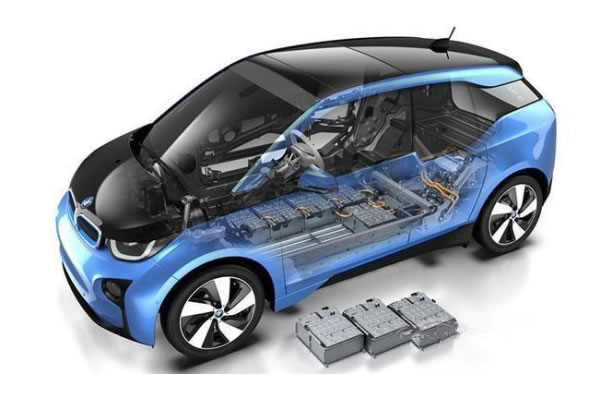
The development of lithium-ion batteries is in a period of rapid growth.
If the batteries are not properly disposed of after being scrapped, it will not only bring serious environmental protection risks, but also security risks (thermal runaway or diaphragm damage, will cause explosion).
However, the waste lithium-ion batteries also contain huge resource opportunities. Standardized and scientific disposal of waste lithium ion batteries has important environmental significance and economic value. As the biggest Lithium battery production, consumption and exportion country in this world , we have huge market potential in recycling waste battery.
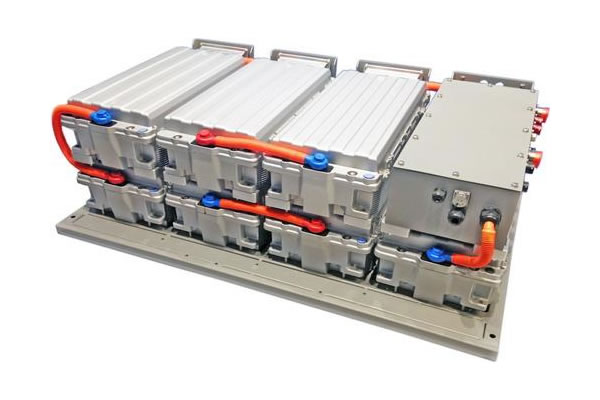
Structure and composition of lithium ion battery
LIB is mainly composed of positive electrode, negative electrode, diaphragm, electrolyte, accessories (shell, pole lug, insulation sheet) and other components, as shown in the figure below.
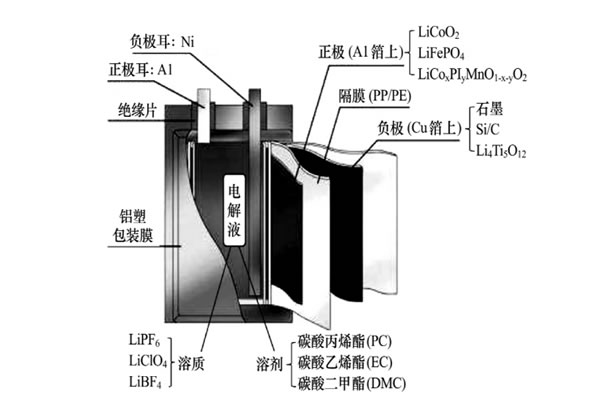
Taking the terpolymer/graphite LIB as an example, the battery contains a variety of valuable metals such as lithium, cobalt, nickel, iron, copper, and aluminum, non-metallic elements such as fluorine and phosphorus that are harmful to the environment, organic liquids such as PC and EC, and hard-to-degrade substances such as plastics. All of these substances have a serious impact on the environment, so it is necessary to carry out rigorous and systematic harmless treatment in the recycling process.
The harm of used lithium ion batteries
1, waste lithium ion battery electrolyte contains highly toxic, flammable and explosive, corrosive electrolytes and organic solvents.
2. Electrolytes mainly include LiPF6, LiBF4, LiClO4, LiAsF6 and other substances that can react with water or acid, and produce HF, PF5 and other toxic gases or other toxic substances, resulting in fluorine pollution and arsenic pollution.
3. Disassembly of waste lithium ion batteries will cause pollution such as waste gas, waste liquid and waste slag, which may cause hidden dangers to the ecological environment and even endanger health. It will waste resources if it is not recycled and processed.
4. There will be a series of pollutants in the process of crushing and sorting and high temperature pyrolysis pretreatment of waste lithium ion batteries, such as decomposition of electrolyte, pyrolysis of plastic film, broken dust, waste slag, etc., these pollutants not only cause serious pollution to the atmosphere and water body, but also have serious corrosion to the equipment.
The valuable metal in used lithium-ion batteries
1, waste lithium ion batteries contain cobalt, but also contain iron, aluminum, copper and other metals, as well as organic electrolyte (technically difficult), which electrolyte recovery has higher value.
2. The shell of waste lithium-ion batteries is usually made of aluminum or plastic, which also has a high recycling value.
3, waste nickel hydride power batteries, nickel content is as high as 30~50%, cobalt content is about 2 ~ 5%, rare earth content is 5~10%, has a very high recovery value.
The metal content of different types of power batteries varies. According to the prediction of authoritative institutions on the proportion of various types of electric vehicles and the capacity of single power batteries, it is estimated that by 2023, the newly scrapped power batteries will reach 101Gwh, and the corresponding recyclable metals are: 119,000 tons of nickel, 23,000 tons of cobalt, 71,000 tons of manganese and 20,000 tons of lithium.
With the continuous development of battery technology and its large-scale application in electric vehicles, more lithium ion batteries will be put into the market in the future, accompanied by the number of decommissioned or failed batteries will also increase rapidly. How to achieve the national environmental protection requirements on the basis of cost control, and maximize the realization of waste lithium ion batteries resource recycling and utilization? It is an important research direction in the future.
Hunan Dingli Technology Co., LTD., combined with the accumulated experience of many years of deep cultivation in the field of thermal equipment, developed a complete set of equipment for waste lithium ion battery pyrolysis and recovery, using anaerobic pyrolysis technology to separate organic matter and inorganic matter in the battery, the removal rate of organic matter can reach more than 99%, providing a better solution for waste lithium battery recycling.