Comparison of two core equipment for vacuum welding
High end manufacturing industries such as aerospace and new energy have strict requirements for welding sealing and accuracy. Vacuum brazing furnaces and vacuum diffusion welding furnaces are mainstream vacuum welding equipment.
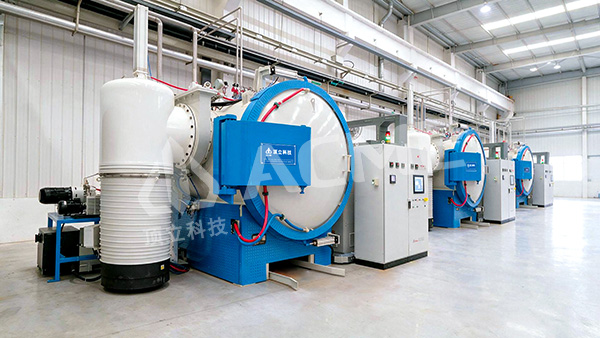
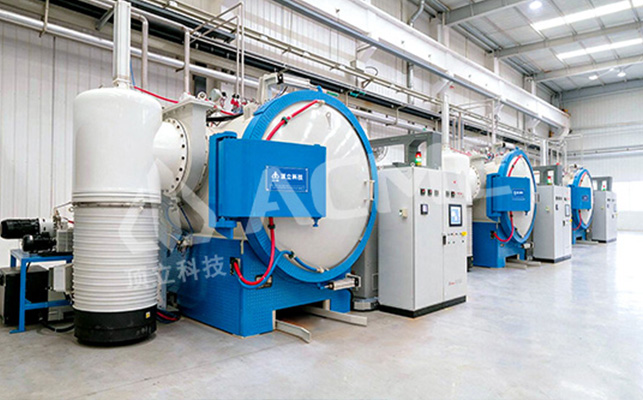
The vacuum brazing furnace is heated under high vacuum (10 ⁻²~10 ⁻⁵ Pa), melting the low melting point brazing material and filling the gaps by capillary action, without melting the base material throughout the process. Process: Pre loaded brazing material → Vacuum pumping → Heating and insulation brazing → Slow cooling out of the furnace. Advantages: No oxidation, small deformation, can weld multiple layers of complex flow channels, suitable for various materials such as stainless steel and high-temperature alloys, excellent air tightness performance; Short production cycle, suitable for mass manufacturing. Applications: Heat exchangers, automotive liquid cooling plates, aviation fuel manifolds, electronic heat dissipation substrates.
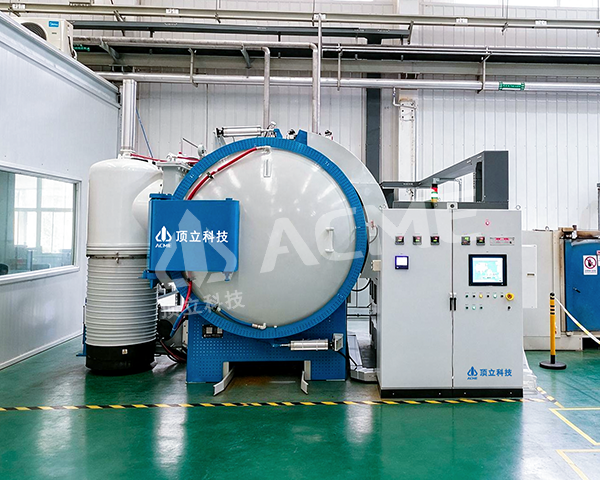
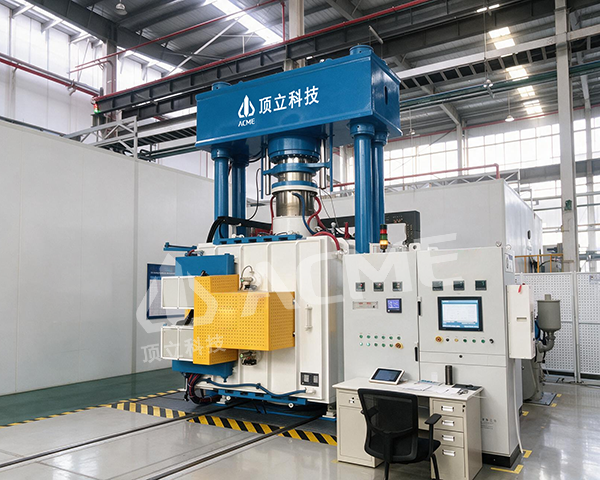
Vacuum diffusion welding furnace is used for solid-state welding without brazing materials. Ultra high vacuum is combined with high temperature and pressure ranging from several tens of MPa to promote the diffusion and integration of atoms on the surface of the base material. The base material does not melt, and the surface roughness of the workpiece needs to be ≤ 0.8 μ m. Process: Mirror pre-treatment → clamping and pressure application → high vacuum heating → long-term insulation and diffusion → cooling and pressure relief. Advantages: The joint performance is close to that of the base material, and it can weld dissimilar materials such as titanium steel and metal ceramics. It has no porosity or inclusions, zero dimensional deformation, and is resistant to high and low temperature corrosion. Applications: Aircraft casings, semiconductor heat sinks, nuclear fusion components, multi-layer precision heat dissipation plates.
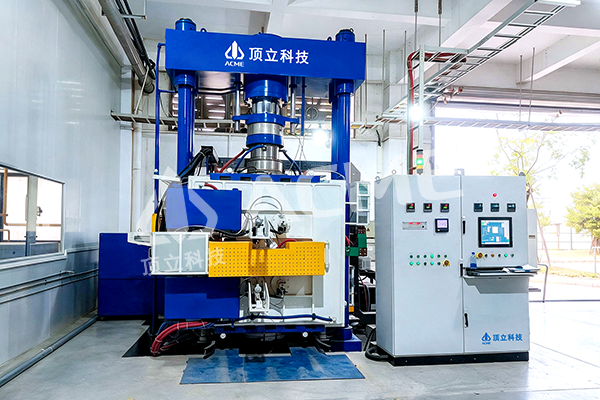
Vacuum diffusion welding furnace is used for solid-state welding without brazing materials. Ultra high vacuum is combined with high temperature and pressure ranging from several tens of MPa to promote the diffusion and integration of atoms on the surface of the base material. The base material does not melt, and the surface roughness of the workpiece needs to be ≤ 0.8 μ m. Process: Mirror pre-treatment → clamping and pressure application → high vacuum heating → long-term insulation and diffusion → cooling and pressure relief. Advantages: The joint performance is close to that of the base material, and it can weld dissimilar materials such as titanium steel and metal ceramics. It has no porosity or inclusions, zero dimensional deformation, and is resistant to high and low temperature corrosion. Applications: Aircraft casings, semiconductor heat sinks, nuclear fusion components, multi-layer precision heat dissipation plates.